
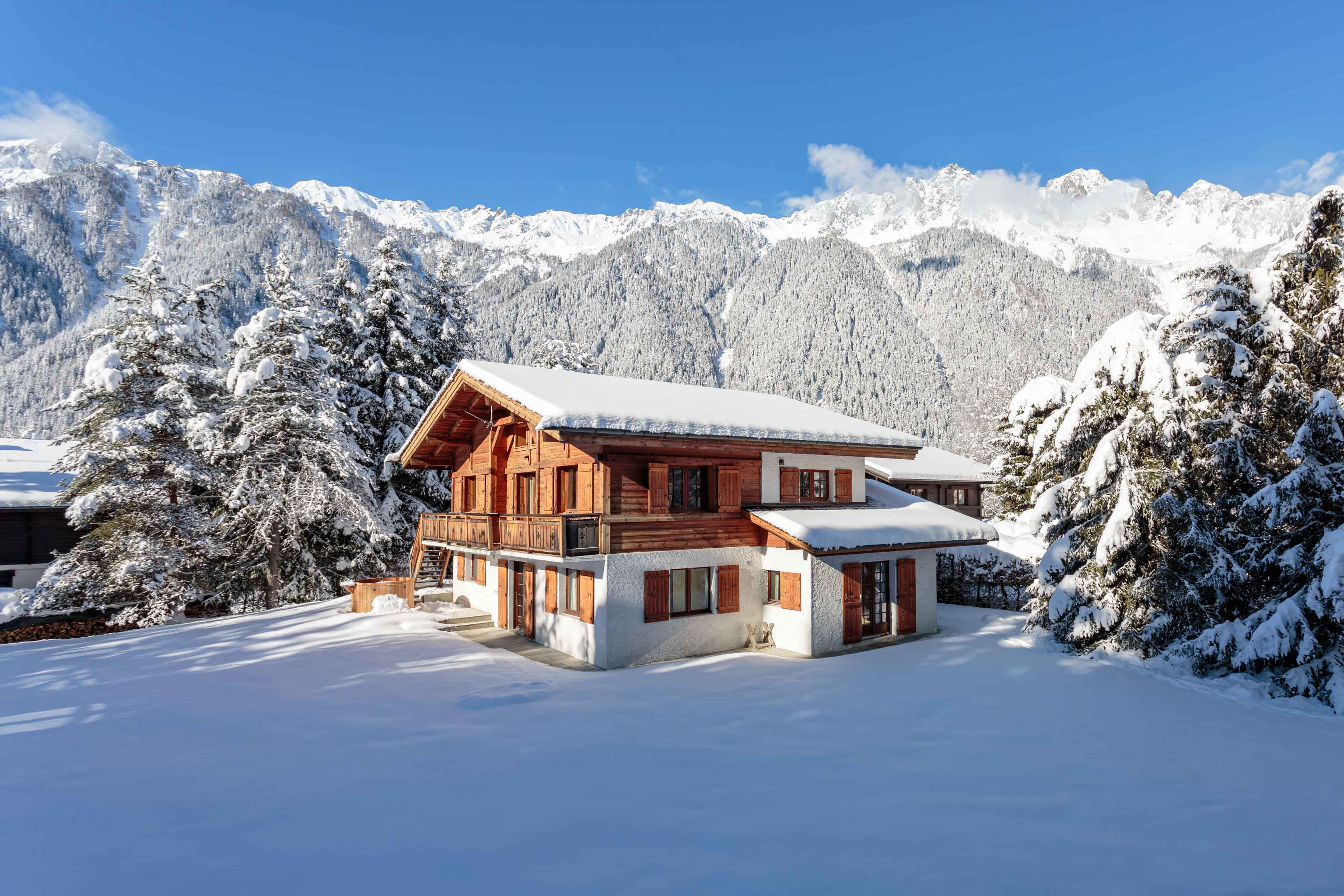
Every winter, skiers fall victim to ski chalet scams. What should be a dream holiday can quickly turn into a costly disappointment.
At Chamonix All Year, we see this happen every season. We regularly hear from holidaymakers who have lost money after booking a chalet that never existed, was never available, or was never owned by the person advertising it.
No one wants to discover a scam just weeks before their trip. By then, the best chalets are often fully booked. Even worse is arriving in resort to find someone else already staying in the chalet you paid for months ago.
If something doesn’t feel right when you’re booking, trust that instinct. Taking a few extra minutes to check details before sending money can save you a lot of stress later.
With more than 15 years of experience in Chamonix, we’ve put together ten practical tips to help you stay safe online when booking a ski holiday. These checks can help you avoid scams and book with confidence.
You can also download and share our visual guide. It’s an easy way to spread awareness and help friends avoid falling victim to chalet fraud.
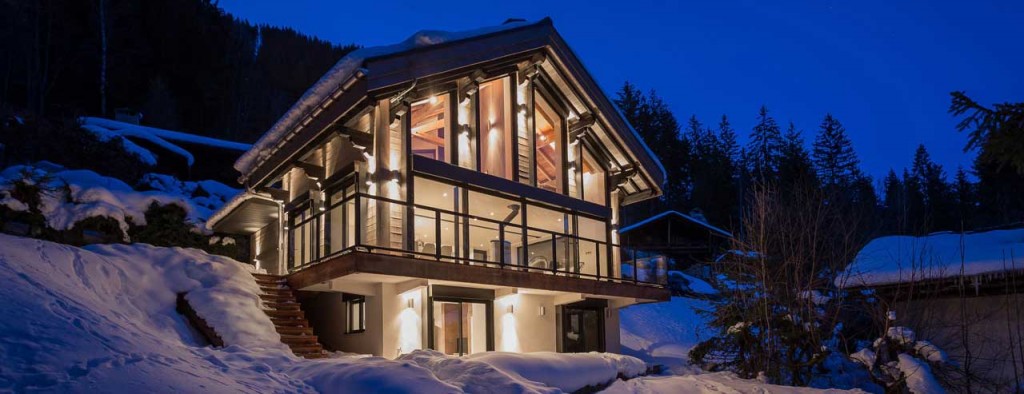
All of the chalets shown in the images on this page are genuine properties. You can book them safely through the Chamonix All Year website, directly with the owners, or via trusted booking platforms.
1. What payment methods are available?
Payment method matters when booking a ski chalet. If you pay by bank transfer, you usually have no protection if the booking turns out to be a scam. Once the money leaves your account, your bank cannot recover it. Scammers often withdraw the funds immediately.
Credit card payments offer much stronger protection. In the UK, Section 75 of the Consumer Credit Act covers purchases up to £30,000. Card providers also vet businesses before allowing them to take card payments, which adds another layer of security.
Some legitimate chalet companies accept bank transfers alongside card payments, which is normal. However, it should raise a red flag if a chalet agency refuses to accept credit cards at all.
That said, individual chalet owners may not always offer card payments. Smaller operations may avoid card fees or prefer to manage cash flow directly. If everything else checks out and you feel confident after speaking directly with the owner or manager, a bank transfer may still be acceptable — but caution is essential.
You should never be asked to send money using services such as Western Union or similar money wiring services.
2. Is their social media legitimate?
Check the company’s social media accounts on platforms such as Facebook, Instagram or X. Look at how long the accounts have existed. As a general rule, they should be at least a year old.
Be cautious if a small chalet company has an unusually large number of followers, likes or shares. That can sometimes indicate paid or fake engagement.
Scroll through the posts and comments. Do they look natural and consistent over time? Genuine businesses usually show regular activity, real interactions and content that matches their website and brand.
If something feels off, trust that instinct and dig a little deeper before booking.
3. Dig deeper into their website
A chalet company’s website can reveal a lot about whether the business is genuine.
Take time to explore the site properly. Established companies often publish useful local content, such as blogs or guides, that go back several years. A brand-new website with little detail can be a warning sign.
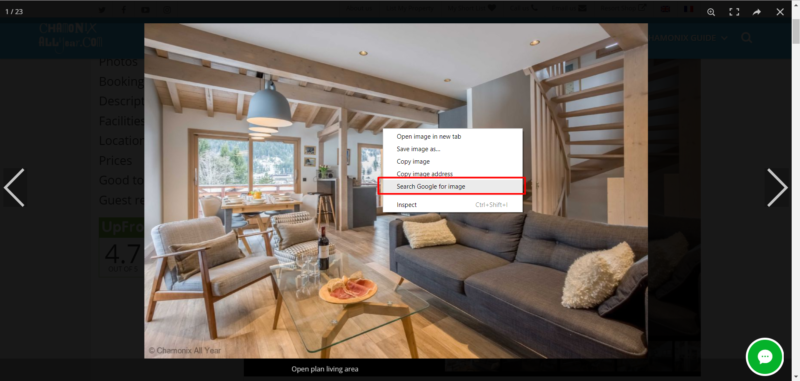
You can also run a few simple checks. Scam websites often copy photos and text from legitimate chalet companies. To check images, right-click on a chalet photo and select “Search Google for image”. The results should show the same website you are viewing. If the image appears on many unrelated sites, or the image search function has been disabled, proceed with caution.
It’s worth noting that some chalet owners advertise the same property through multiple agencies, sometimes under different names. If you’re unsure, ask the owner directly where else the chalet is advertised. This can help confirm that the website you’re booking through is legitimate.
Some scam websites also block text selection. They do this to hide the fact that they copied the content from another site. Try dragging your mouse to highlight text on the page. If you can’t select anything, treat that as a warning sign.
You should also look for a website with live availability. Avoid sites that rely on provisional bookings while a third party “checks” availability for you. Choose a platform where you can book directly and receive instant confirmation once everything else has checked out.
This saves time and reduces the risk of losing your chosen chalet to someone else.
4. Check availability
Legitimate chalet owners and agencies usually receive bookings for peak winter weeks up to a year in advance. Christmas, New Year and February half term often sell out early. If a chalet shows a completely empty calendar for the winter season, take this as a warning sign.
There are a few genuine exceptions. The chalet may be new to the rental market, recently built, fully renovated or under new ownership. In these cases, the availability may be real.
If you spot an empty calendar, contact the company directly and ask for an explanation. A reputable owner or agency should be able to clarify this easily.
5. Check testimonials
Guest reviews offer one of the best ways to judge a chalet owner or company. Be cautious with testimonials shown only as text on a website, as these are easy to fake.
Look for reviews hosted on independent platforms such as Tripadvisor, Airbnb or UpFront Review. These services verify bookings and make it much harder to manipulate feedback.
Consistent, detailed reviews across multiple platforms usually point to a genuine and reliable business.
6. Pick up the phone
Don’t rely on email alone. Follow up with a phone call, ideally to a landline, and ask specific questions about the chalet you want to book. Use the call to raise anything that feels unclear or uncomfortable.
A genuine chalet company should display clear contact details on its website, including a phone number and email address. You should be able to reach someone without difficulty.
The person you speak to should know the chalet well and understand the resort. Ask practical questions such as how far the chalet is from the slopes, shops or public transport.
If the answers feel vague or unhelpful, take note. Be cautious of businesses that refuse to speak on the phone or only communicate by email or mobile messaging.
Don’t hesitate to ask for advice. If you’re choosing between two or three chalets, a phone call can help you compare options. A reputable company will talk you through the pros and cons so you can book with confidence.
7. Do some more internet searching
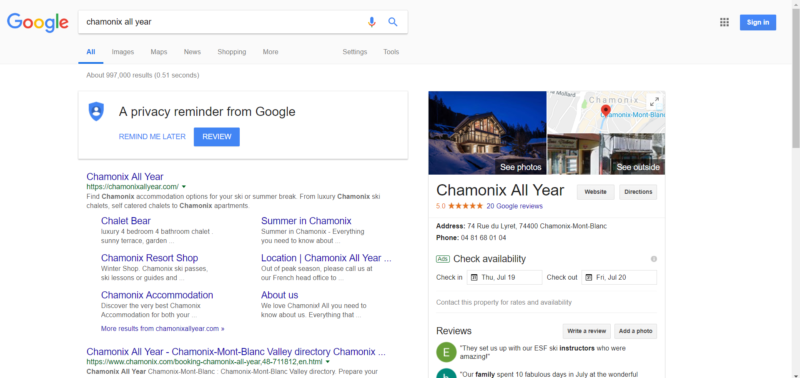
Many legitimate chalet companies use Google Ads to promote their business. That’s normal. However, you should also see the company appear in the organic search results below the adverts. If the website only shows up as a paid result, it may be very new or lack a reliable online history.
Pay close attention to the web address in paid adverts. If the advert does not clearly show the company’s name in the URL, treat it with caution. Some scam sites use paid ads to appear trustworthy while hiding behind unrelated domain names.
You should also check whether the company has a Google Business profile. This usually appears on the right-hand side of the search results. Reputable businesses take the time to set this up, as it adds transparency and trust. Google verifies these listings by sending a postcard to the business address before they go live, making them harder to fake.
If a company is difficult to find online beyond paid adverts, take that as a reason to investigate further before booking.
8. Stick to the booking platform you’re using
If you book through platforms such as Airbnb or Booking.com, keep all communication and payments on that platform.
Be wary of listings that ask you to move the booking elsewhere or request payment by bank transfer. This is a common tactic used in chalet scams.
Following the platform’s payment process ensures you benefit from its protection, guarantees and dispute resolution. If someone pressures you to pay outside the system, walk away and report the listing.
9. Check company registrations
Contact the local tourist office and ask if they know the chalet owner or company. Established businesses usually build relationships locally, and the tourist office may be able to confirm their reputation.
Some websites display industry badges such as ABTA or ATOL to build trust. Don’t rely on logos alone. Anyone can copy and paste them onto a website. Always check the official ABTA or ATOL websites to see if the company is listed as a registered member.
Keep in mind that many individual owners and small or medium-sized chalet operators do not need ABTA or ATOL licences. In these cases, a clear phone conversation and reassurance from the owner or manager should help confirm legitimacy, especially if the other checks on this list also look good.
10. Does it seem too good to be true?
If a chalet shows plenty of bookings but still has availability for a peak week at the last minute, pause and ask questions. Call the company and ask why the week is still free. There may be a genuine reason, such as a recent cancellation or a chalet that is new to the rental market. A legitimate company should be able to explain this clearly.
The same applies to price. If a chalet looks unusually cheap for its standard or for the week you plan to travel, ask yourself why. Compare it with similar properties in the area.
If the deal feels unrealistic or rushed, trust your instincts. Taking a moment to question a bargain can help you avoid a costly mistake.
Conclusion
You don’t need to act like a private investigator to check whether a chalet listing is genuine. However, booking large chalets or peak winter weeks often involves significant sums of money. Taking time to check the details before you commit is always worth it.
By following some or all of the steps above, you greatly reduce the risk of being scammed. More importantly, you increase your chances of booking with a reputable chalet owner or company that knows the resort well and takes pride in looking after its guests.
Once you’ve booked, stay in touch. The best chalet companies remain available as your trip approaches and are happy to help with planning, questions and final details, helping to ensure your holiday runs smoothly from start to finish.
Bonus tips to avoid a ski chalet scam
If you want extra reassurance when booking your ski holiday, there are a few more checks worth making. These steps can help you avoid scams and book with confidence.
Choose a local specialist where possible. A company based in the resort usually knows the area far better than a large tour operator. If the local tourist office can vouch for them, that adds another layer of trust. Local specialists often provide a more personal service and remain available during your stay if you need help or advice.
Local companies also tend to have strong relationships in resort. This can mean better access to local knowledge and, in some cases, preferential rates on services such as ski passes, ski hire and airport transfers.
Look for industry recognition. Awards, nominations or professional memberships suggest that a company has been reviewed and vetted by established organisations within the travel industry.
Be cautious of hidden extras. Reputable chalet owners and agencies aim to keep pricing clear and transparent. The advertised price should usually include essentials such as linen, end-of-stay cleaning and utilities like electricity and Wi-Fi.
If you’re looking for a trusted, locally based chalet company in Chamonix, Chamonix All Year has been operating in the valley for many years and offers a wide range of self-catered chalets and apartments. You can browse available properties online or get in touch if you’d like to speak to someone directly.