
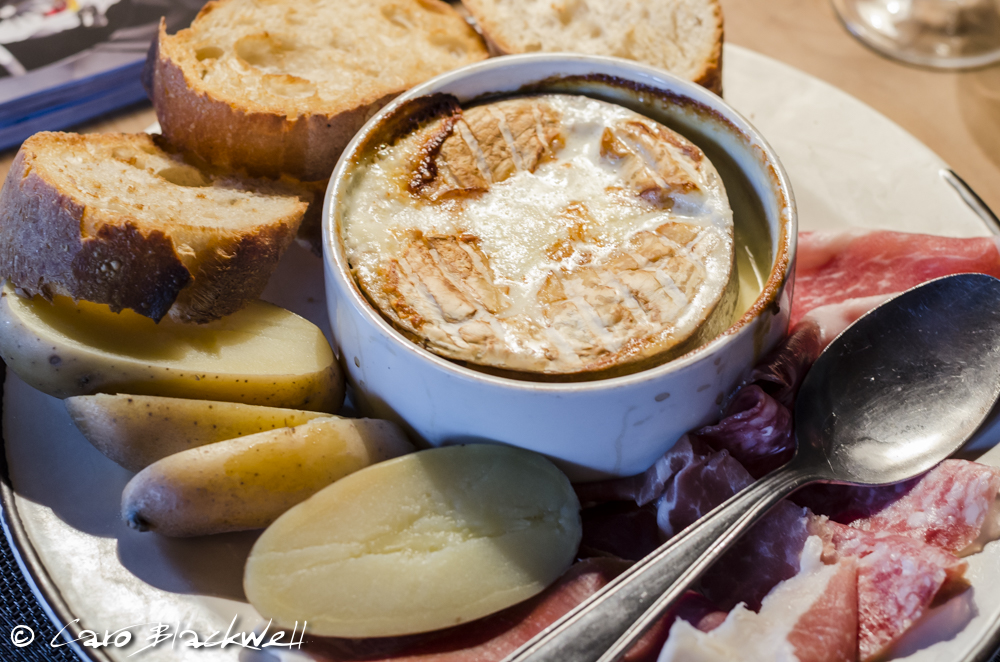
Whether you’re curious about the culinary traditions and farming heritage of Haute-Savoie, or simply keen to explore the local cuisine of Chamonix, there’s no need to retreat into the mountains with a few goats and a wheel of Reblochon to experience it. Today, these historic flavours live on in the valley’s kitchens and restaurants.
After a long day of skiing, hiking or exploring, you can enjoy regional specialities rooted in generations of local know-how. Savoyarde cuisine remains a proud part of everyday life in Chamonix — cooked at home and served across the valley in restaurants that continue to celebrate its rich, comforting flavours.
Highlights of Savoyard cuisine
Raclette
A semi-hard cheese made from cow’s milk, traditionally formed into a wheel weighing around 6kg. Best known for its melting qualities, raclette is also the name of the dish itself, popular throughout the French and Swiss Alps. The cheese is heated and the melted surface is scraped off — from the French racler, meaning “to scrape”.
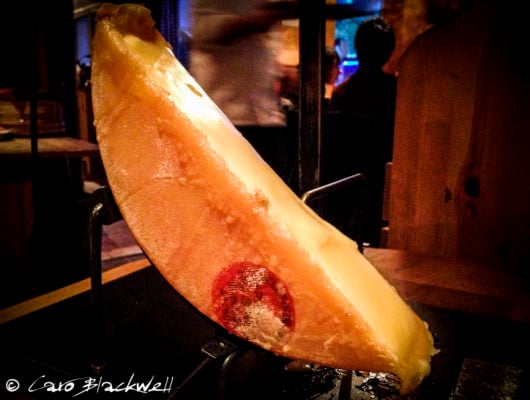
A classic raclette is served with small, firm potatoes such as Bintje, Charlotte or raclette varieties, alongside gherkins, pickled onions and cured meats including jambon cru or cuit, salami and viande des Grisons. It’s typically accompanied by drinks such as kirsch, herbal tea, or a glass of Fendant, the local white wine made from the Chasselas grape.
Tartiflette
A classic dish from the Savoy region of the French Alps, made with potatoes, reblochon cheese, lardons and onions. Rich, comforting and designed for cold mountain evenings, it has become a staple of alpine cuisine.
The name tartiflette is thought to come from the Arpitan word tartiflâ, meaning potato. While it feels deeply traditional, the dish is actually a modern creation inspired by an older Savoyard recipe known as péla — a simple potato and onion gratin cooked without cheese in a long-handled pan.
Tartiflette in its current form was developed in the 1980s by the Union Interprofessionnelle du Reblochon as a way to promote reblochon cheese. Today, it appears in many variations, including versions made with salmon, while still staying true to its alpine roots.
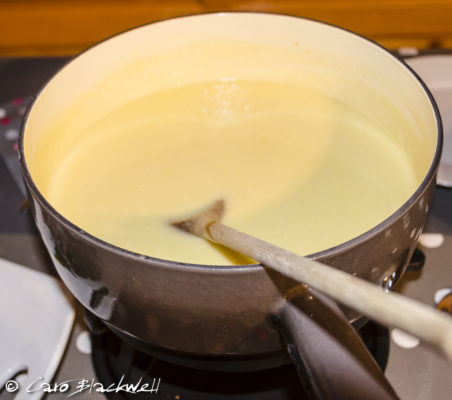
Fondue Savoyarde
Made using a blend of local alpine cheeses, typically Comté and Beaufort, often combined with one or two others such as reblochon, abondance or the French equivalent of gruyère.
The cheese is melted together and served in a communal pot, known as a caquelon or fondue pot, which sits over a small portable stove (réchaud) heated by a candle or spirit burner. Diners use long-stemmed forks to dip pieces of bread into the warm, melted cheese, making fondue a shared and sociable way to enjoy this Savoyarde classic.
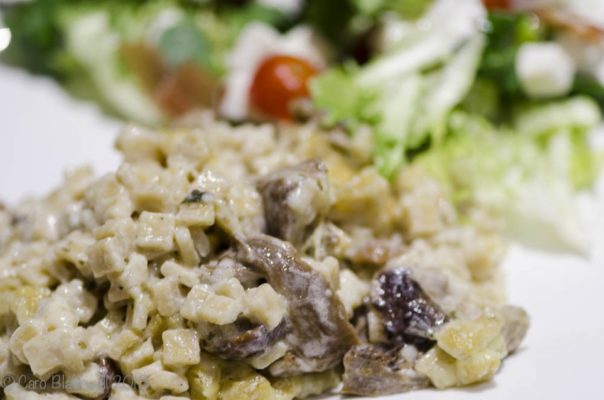
Crozets de Savoie
Small, flat, square-shaped pasta originating from the Savoy region of the French Alps. Traditionally, they were made at home using buckwheat, wheat, or a mix of the two, and formed an essential part of local mountain cooking.
Today, crozets are best known as the base for two regional dishes: croziflette, a variation of tartiflette made with reblochon cheese, and crozets served with diots, a traditional Savoyard sausage.
Diots
Traditional Savoyard sausages that come in several varieties. Some are fresh and intended to be cooked — grilled, boiled or prepared in the traditional way with white wine — while others are dried.
They can be eaten hot or cold. When served hot, diots are most commonly accompanied by boiled potatoes or polenta, making them a simple and hearty alpine dish.
Croûte Savoyarde
Traditional dish originally created to make use of ageing bread and cheese. Thick slices of bread are layered into a small baking dish and moistened with local wine before adding Savoyard cheeses, along with meat or mushrooms and a touch of cream.
The dish is baked until golden and crisp on top, resulting in a rich and comforting mountain meal. It is often served with porcini mushrooms, known in France as cèpes, which add an earthy depth of flavour.
Le Farçon
Traditional alpine dish that requires a special mould, first lined with streaky bacon. The filling is made from potatoes, onions, prunes, raisins and cream, all baked slowly in the oven to create a rich, sweet-and-savoury flavour.
Sometimes referred to as le farcement, this dish is particularly popular in home kitchens around Savoie’s Mont Blanc region, but it is rarely found on restaurant menus today.
Where to experience local cuisine in the Chamonix valley
From Servoz to Argentière, our top tips for tasting Savoyard cuisine in the Chamonix valley will take you back in time — and across borders — through some of the region’s most traditional flavours.
Maison du Lieutenant
2231 Le Mont, 74310 Servoz | +33 (0)7 78 24 96 77
Located in the heart of Servoz, the Maison du Lieutenant explores traditional mountain life and rural farming in the Mont Blanc region. Built around 1480, the building is a well-preserved example of Savoyard alpine architecture and is free to visit.
Exhibitions focus on historic farming methods, local produce and daily life in the mountains. Visitors can also take part in bread-making sessions using the original kitchen, along with occasional cooking workshops, children’s activities and seasonal events.
Nearby, the Maison de l’Alpage offers further insight into shepherding traditions and mountain agriculture, both of which still influence Savoyard cuisine today.
La Fine Bouche
120–140 Place du Poilu, 74400 Chamonix | +33 (0)4 50 21 10 63
La Fine Bouche is a small, centrally located restaurant specialising in fait maison Savoyard dishes made with fresh, seasonal produce. Alongside dining in, they offer takeaway options and catering for private events.
There’s also a carefully selected range of local products for sale, including elderflower syrup, fir syrup, terrines, regional wines, cheeses and charcuterie. The restaurant is located on the same square as Chamonix All Year apartments Ginabelle 8 and Ginabelle 14, making it a convenient option for guests staying nearby.
La Calèche
18 Rue du Dr Paccard, 74400 Chamonix | +33 (0)4 50 55 94 68
Serving classic Savoyard cuisine in central Chamonix, La Calèche offers an extensive menu of regional specialities in a traditional stone farmhouse setting. The multi-level layout makes it well suited to groups.
The highlight is the self-served raclette, where diners melt cheese at the table using individual irons. Expect a strong cheese aroma and an unapologetically traditional alpine experience.
La Cabane des Praz
23 Route du Golf, Les Praz, 74400 Chamonix | +33 (0)4 50 53 23 27
Located beside the Chamonix golf course, La Cabane des Praz combines a traditional wooden chalet exterior with a modern interior and menu. The restaurant serves refined French cuisine alongside Savoyard classics.
In summer, the terrace offers open views of the Mont Blanc massif, while winter dining is centred around a large open fire, making it a popular year-round choice.
Le Castel
100 Route des Tines, Les Praz, 74400 Chamonix | +33 (0)4 50 21 12 12
Situated at the foot of the Flégère cable car, Le Castel blends Italian cuisine with Savoyard influences. The menu combines high-quality Italian ingredients with local alpine dishes, complemented by an extensive wine list.
The setting is elegant yet relaxed, reflecting both Alpine tradition and Italian flair from just across the Mont Blanc Tunnel.
La P’tite Verte
89 Rue Charlet Straton, Argentière, 74400 Chamonix | +33 (0)4 50 54 54 54
A long-standing favourite with locals, La P’tite Verte is known for its welcoming, family-friendly atmosphere and generous Savoyard portions. Signature dishes include fondue with cèpes (porcini mushrooms), as well as a popular tomato-based fondue.
Meals are traditionally finished with a glass of génépi, a herbal alpine liqueur made from high-altitude plants native to the region.
La Crèmerie du Glacier
100 Route des Tines, Argentière, 74400 Chamonix | +33 (0)4 50 54 07 52
Founded in 1926, La Crèmerie du Glacier began as a refreshment hut for hikers near the Argentière Glacier. Over time, it evolved into a well-known mountain restaurant serving classic Savoyard dishes.
Located at around 1,300 metres in the forest above Argentière, it’s a rewarding destination for those looking to combine alpine scenery with traditional regional cuisine.
Tasting Savoyard cuisine in Chamonix
Savoyard food is deeply tied to the valley’s farming history, mountain climate and mountaineering heritage. From simple dishes once cooked in refuge kitchens to rich, cheese-based classics enjoyed today, local cuisine remains a key part of life in the Chamonix valley — best experienced slowly, and preferably after a day outdoors.
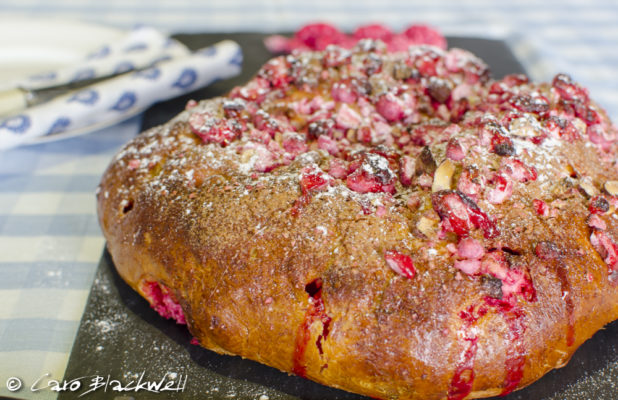
Many thanks to Caro Blackwell from the blog Taste of Savoie for kindly giving us permission to use her wonderful photographs. Her blog features recipes for many Savoyard favourites, along with creative twists on the classics — including her five ways with Reblochon.
While we haven’t covered Savoyard desserts here, Caro’s blog also includes a tempting selection of sweet treats, such as Brioche de Saint Genix (pictured above). Why not try one of her recipes while staying in your self-catered Chamonix accommodation and bring a taste of Savoie into your own kitchen?