
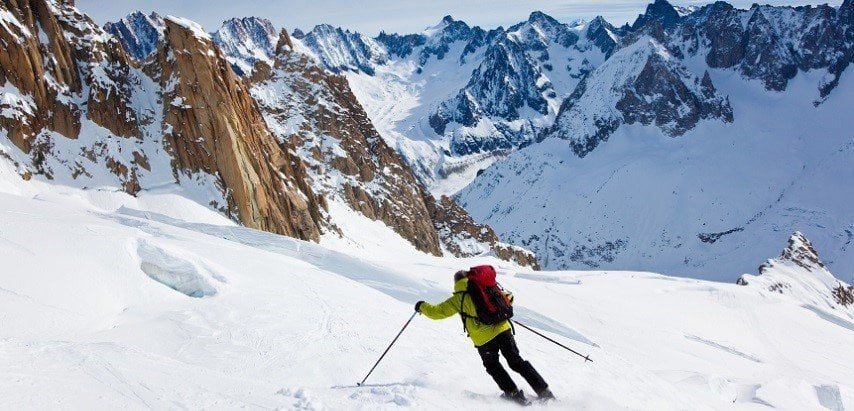
A good ski backpack is an essential part of your kit on the mountain. It carries everything you need for a safe, comfortable and enjoyable day on the slopes — and choosing the right one makes all the difference.
Choosing the best backpack for the job
When selecting a backpack for skiing, think about how it will feel on lifts and when you’re moving at speed. Most chairlifts ask skiers to remove their backpacks, so you’ll either need to swing it round to the front or take it off completely before loading. Some outdoor brands now make swivel-style backpacks designed specifically for chairlifts, making this process much easier and safer.
Size and weight also matter. A ski backpack shouldn’t feel bulky or slow you down, so aim for something compact — usually 10–15 litres is more than enough for piste skiing. This gives you space for the essentials without adding unnecessary weight.
If you’re a more advanced skier planning any bootpacking, or if you’re heading down the arête onto the Vallée Blanche, you’ll need a backpack that allows you to attach your skis or snowboard securely. This makes steep or technical sections easier to manage and keeps your hands free when climbing or moving along ridges.
Essentials in your backpack on the mountain
Once you’ve chosen the right backpack, it’s time to think about what you’ll need on the mountain. Some items are essential for comfort and safety, while others are simply useful to have throughout the day.
Suncream and lip balm: A small travel-size suncream is a must. The sun is much stronger at altitude and reflects off the snow, so regular application is essential to protect your skin. Lip balm helps prevent dry, cracked lips, and it’s even better if it includes SPF.
Goggles or sunglasses: You’ll head out wearing one or the other, but make sure you pack the alternative in your backpack. Weather in the mountains can change quickly, and you’ll be grateful for the switch. If your goggles have interchangeable lenses, pack those too so you can adapt to different light conditions.
Water bottle: Bring a reusable water bottle to stay hydrated during the day. Skiing is thirsty work, and carrying your own water saves money on expensive mountain cafés while also reducing plastic waste.
Passport: Many French resorts, including Chamonix, offer ski passes that allow access to neighbouring areas in Italy or Switzerland. You may be asked for identification, so keep your passport in your backpack to avoid missing out on a cross-border ski day with friends.
Other useful items to have in your backpack
Flask: A small vacuum flask is ideal if you’re staying in self-catered accommodation. Make a hot drink before you head out and enjoy it on the side of the piste without spending extra in mountain cafés. You can also fill your flask with homemade soup from the night before — a great way to avoid lunchtime crowds, stay warm and save money during your ski day.
Biscuits or chocolate bars: It’s always worth having a small snack in your backpack. Mini chocolate bars or biscuits are ideal for keeping your energy up and make a perfect chairlift treat between runs.
Buff or scarf: Even if the day starts warm, mountain weather can change quickly. Having an extra buff or lightweight scarf in your backpack helps you stay comfortable if you ski into shaded areas or if the temperature suddenly drops.
Bobble hat: Wearing your helmet at lunch is never a good look, but helmet hair can be just as bad. A simple bobble hat in your backpack fixes the problem instantly and keeps you warm during breaks.
Blister plasters: Every ski group has someone suffering with uncomfortable boots. Although the best solution is to change the size at the hire shop or get boots professionally fitted, blister plasters can offer quick relief — and keep your group’s morale high.
Hand warmers and glove liners: Cold days in January make these items invaluable. Reusable hand warmers are the more eco-friendly choice, and e-touch glove liners are a great option if your ski gloves aren’t touchscreen compatible.
Waterproof phone case: Protecting your phone is essential when you’re surrounded by snow, ice and moisture. A waterproof case helps keep your device safe, whether you’re taking photos, checking the piste map or calling your group.
What have we missed?
We hope this guide helps you get organised for your next ski holiday, but we’d love to hear your ideas too. If there’s something you always pack in your ski backpack that we haven’t mentioned, let us know — what are your must-have mountain essentials?