
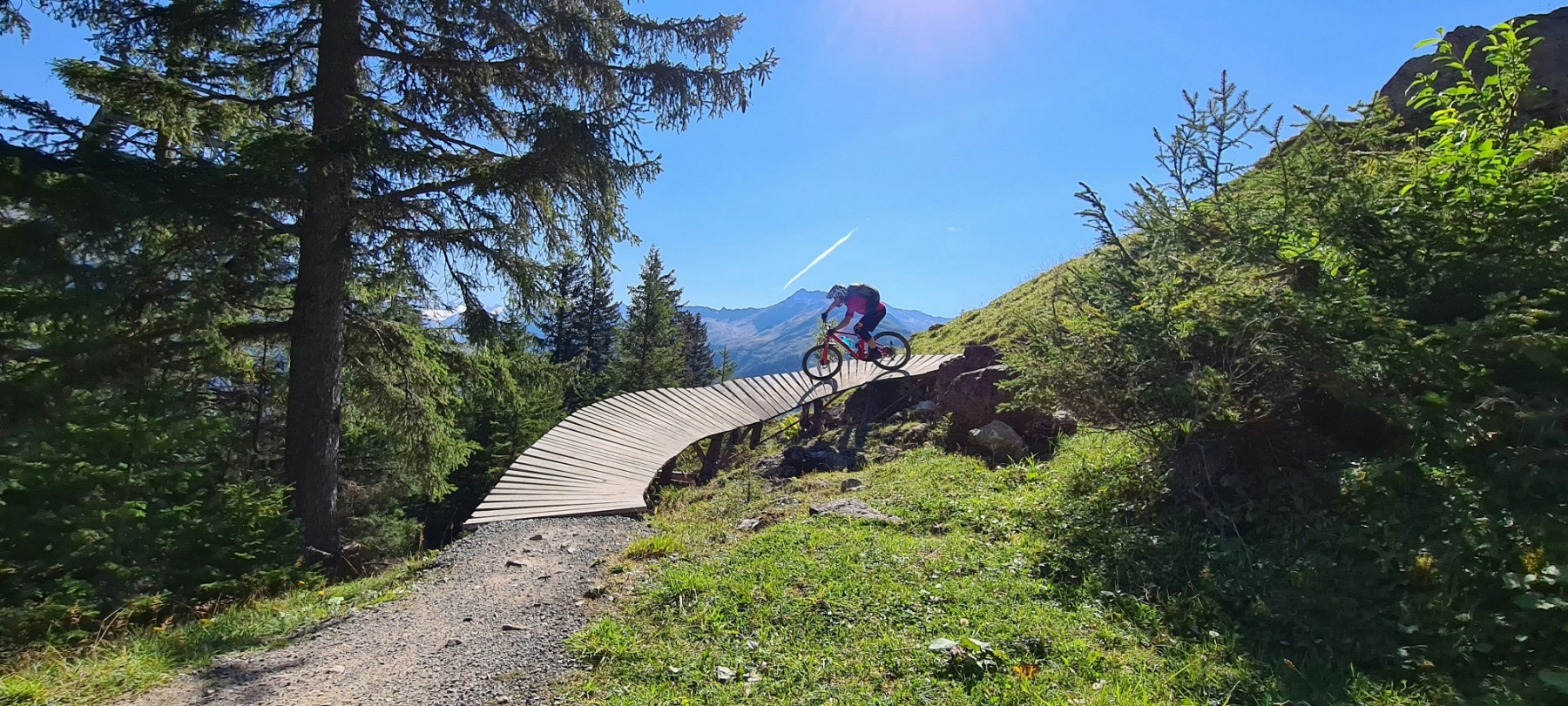
Chamonix is world-famous for its extreme sports — and mountain biking is no exception. When the snow melts, the same steep slopes that make Chamonix a legendary ski destination transform into thrilling trails for bikers. From technical downhill descents to scenic cross-country routes, there are mountain bike trails in Chamonix for every level. Plus, several lifts are open throughout summer, making it easy to access high-altitude trails and save your energy for the ride down.
Get Started Mountain Biking in Chamonix
If you’re new to mountain biking in Chamonix, the trail grading system makes it easy to find routes that match your ability. All Chamonix mountain bike trails are colour-coded — just like ski slopes — so you’ll know what to expect before setting off. The grading applies to both cross-country and downhill routes.
Here’s what each colour means:
Green – perfect for novices and absolute beginners
Blue – suitable for beginners gaining confidence
Red – intermediate level, with steeper sections and technical features
Black – advanced trails for experienced riders only
Start with a few green or blue routes to build confidence, then work your way up as your skills improve — there’s a trail for every level in Chamonix.
Chamonix mountain bike trails for beginners & families
If you’re new to mountain biking in Chamonix, there are plenty of easy routes to get you started. The flat trails along the Arve River are ideal for beginners and families. These well-maintained cross-country paths meander through meadows and villages, offering plenty of places to stop for a drink or an ice cream along the way.
Around Bois du Bouchet and Les Bois, you’ll find a network of interconnecting trails where you can create your own loops without repeating the same route — perfect for building confidence and keeping things fun for children.
Once you’re ready for something a little more adventurous, try the Petit Balcon Nord or Petit Balcon Sud. These low-altitude trails run along each side of the Chamonix Valley and are easy to access without using lifts. Expect a mix of forest paths, gentle climbs, and a few roots and rocks to navigate. Don’t worry if you need to hop off and push in places — the gradients are manageable, and the views make it all worthwhile.
When you’re feeling more confident, try linking both the Balcon Nord and Balcon Sud into a full loop for a half-day ride (around 3–4 hours). It’s a great way to experience the whole valley at your own pace.
Once you’ve mastered the basics, why not explore other Chamonix summer activities — from hiking and climbing to paragliding.
Dedicated Chamonix mountain bikes zones
The Chamonix Valley has two main dedicated mountain biking zones at opposite ends of the valley — Les Houches and Le Tour. These areas are quieter than the centre of Chamonix but easy to reach, offering lift-accessed, well-maintained trails for a range of skill levels. Whether you’re an intermediate rider looking to progress or an advanced biker chasing flow and challenge, these are the best spots to ride.
Le Tour is known for its rolling alpine meadows, panoramic views, and approachable terrain. Even if you’re still building your mountain-biking confidence, the area feels open and welcoming. From the mid-station, you can take a gentle green trail back down to the village, or test yourself on the blue run from the upper chairlift when you’re ready for more.
Intermediate bikers can ride over the back of Le Tour towards Vallorcine, following forested singletracks all the way down to the village. From there, you can take the lift back up or hop on the train to return to Chamonix.
At the other end of the valley, Les Houches offers more variety and challenge for intermediate to advanced riders. Since 2013, the area around the Prarion lift has featured a network of blue and red runs, providing options for different abilities and plenty of flow. The older trails from the Bellevue cable car still exist but are no longer maintained, so it’s best to stick to marked routes unless you know the area well.
Both Le Tour and Les Houches give riders a proper bike-park experience in Chamonix — with quieter trails, lift access, and stunning mountain views, all without the crowds.
Advanced mountain biking in Chamonix
For experienced riders, Chamonix offers some of the most challenging and rewarding mountain bike trails in the Alps. The valley’s famously steep terrain opens up a whole network of routes once the snow melts — perfect for riders looking to test their technical skills and endurance.
Advanced bikers can explore Le Tour into Switzerland, the Les Houches to St Gervais route, or tackle sections around Brévent-Flégère and Les Grands Montets. Expect steep gradients, rocky switchbacks, and fast forest descents with unforgettable views of Mont Blanc.
For those who enjoy long rides and natural trails, the Petit Balcon Nord and Sud routes can be linked into challenging full-valley loops, combining flowy singletrack with technical alpine terrain.
Keep in mind that north of Flégère lies the Aiguilles Rouges Nature Reserve, where biking is not permitted — so always stay within marked zones and respect protected areas.
Top Tips for a Great Day on Your Bike in Chamonix
Before you hit the trails, a little preparation goes a long way to make your mountain biking adventure in Chamonix even better. Here are our top tips:
Stay hydrated: Summer days in Chamonix can be hot, and you’ll be working hard on the climbs, carry plenty of water.
Pack snacks: Keep your energy up with cereal bars, nuts, or fruit. A few quick bites on the trail can make a big difference.
Be ready for mountain weather: Conditions change fast in the Alps. Bring sun cream, a light waterproof, and an extra layer just in case.
Protect yourself: For downhill or technical trails, consider wearing body armour or extra padding. If you’re hiring a bike, ask if protection gear is included.
Know your route: Pick up a free trail map from the Tourist Office, or check out the locally produced Chamonix Bike Book for route ideas and insider tips. Booking a guide is another great way to discover hidden trails safely.
Hire your gear: Many shops in Chamonix offer bike hire — and you can often find discounts through local partners.
Mountain biking code of conduct in Chamonix
Responsible mountain biking helps keep Chamonix’s trails safe, sustainable, and enjoyable for everyone. By following a few simple rules, you’ll help protect the environment, respect other trail users, and make sure riders continue to enjoy access to this incredible alpine terrain.
Before you set off on your first mountain bike ride in Chamonix, it’s important to understand the local riding etiquette. Your free trail map from the Tourist Office covers these points, but here’s a quick refresher so good habits come naturally on the trails.
Respect and safety
Always respect pedestrians and give them plenty of space when overtaking.
Be courteous on shared paths and follow the local highway code.
Use a bell to let others know you’re approaching.
Keep your speed under control and ride within your limits.
Always wear a helmet for your safety.
Bike care and preparation
Check that your bike is in good condition before heading out.
Carry a basic repair kit for punctures or quick fixes on the trail.
Respect the environment
Protect Chamonix’s beautiful surroundings — respect wildlife, plants, and private land.
Stay on marked trails — taking shortcuts causes erosion and damages the mountain ecosystem.
Take all your rubbish with you and ride discreetly to preserve the peace of the valley.
Plan ahead
Let someone know your planned route and expected return time, just as you would for any mountain outing.
Good to Know: Mountain Biking in Chamonix
Getting around the Chamonix Valley with your bike is easy once you know your transport options.
By train:
The Mont Blanc Express runs the full length of the valley, from Vallorcine to St Gervais. With your guest card, travel between Vallorcine and Servoz is free, and bikes are welcome on board — ideal for one-way rides.
By bus:
Most regular buses don’t carry bikes, but during summer there’s a special VéloBus service connecting Le Prarion (Les Houches) to Le Tour. Its schedule differs from the normal bus timetable, so make sure to check the dedicated VéloBus timetable before you travel.
Cable cars
Most cable cars open in mid-June and close around early to mid-September. Keep in mind that mountain biking is restricted in many areas during July and August, when hikers have priority on shared trails. However, the dedicated bike zones at Les Houches and Le Tour remain open throughout the summer.
Best time to visit:
For the widest choice of trails and fewer crowds, plan your Chamonix mountain biking trip for late June or early September. If you’re happy to pedal uphill and don’t rely on lifts, May and October can also be great months to ride, with quieter trails and cooler conditions.
Trail maps:
Pick up your free mountain biking map from the Chamonix Tourist Office. Similar to a ski map, it highlights lift-accessible and cross-country routes, explains local trail signs, and includes the Chamonix mountain biking code of conduct.
If you’re planning a Chamonix mountain biking holiday or want to try it as part of your summer adventures, don’t hesitate to get in touch — our team will be happy to help you plan your ride.