
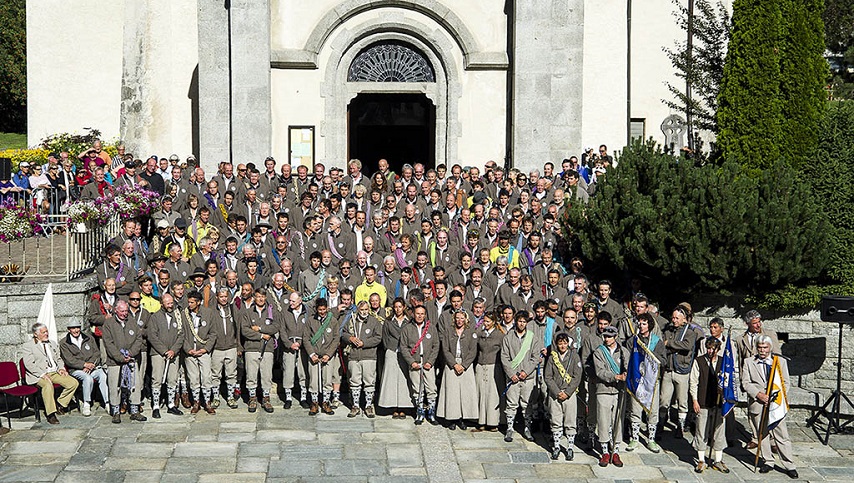
The Compagnie des Guides de Chamonix is one of the most respected names in mountaineering. Founded in 1821, it has shaped the history of alpinism in the Mont Blanc valley. Each year, this long tradition is celebrated during the Fête des Guides, held on 15 August. The event brings together guides, residents and visitors to honour the company’s heritage and to support the Caisse de Secours, the fund that assists guides and their families in the event of injury or death.
History of Chamonix Fête des Guides
Hundreds of volunteers, guides and non-guides contribute their time to the festival. It is both a celebration of shared history and a vital source of support for the community.
“The bond that unites us to our clients and to the people of Chamonix is stronger than any rope.”
— Guide Bureau
A look back at the origins
By the end of the eighteenth century, Western society had begun to rediscover the mountains. Poets, painters and thinkers such as Byron, Friedrich and Rousseau helped transform the Alps from feared places of myth into landscapes of beauty and inspiration. This shift marked the beginning of alpine tourism.
Visitors arrived in Chamonix to see the glaciers — especially the Mer de Glace — and the towering Mont Blanc. Most had little or no experience on ice or steep terrain. Local farmers and hunters soon became their guides, offering expertise and earning essential income.
By the early nineteenth century, Chamonix welcomed between 2,000 and 3,000 visitors each year. More locals took up guiding, and the most challenging outings included glacier travel and attempts on Mont Blanc. The mountain had been first climbed in 1786 by Dr. Michel-Gabriel Paccard and Jacques Balmat, both from Chamonix. Their success, followed by Horace-Bénédict de Saussure’s ascent the following year, accelerated tourism and set the stage for a formal guiding organisation.
The Hamel accident and the need for structure
As interest in the Alps grew, accidents became more frequent. Improved travel meant the mountains were easier to reach, and more people attempted ambitious climbs.
In 1820, a tragic accident on Mont Blanc highlighted the need for official regulation. Three local guides — Pierre Carrier, Pierre Balmat and Auguste Tairraz — were killed in a crevasse fall. Decades later, the Glacier des Bossons returned their remains to the surface, allowing surviving guide Joseph-Marie Couttet to identify some of the objects and body parts.
The tragedy made clear that guiding required formal organisation, both for safety and for fair working conditions. The community needed:
qualified, trained guides
protection for guides and their families
a standardised system of pricing and risk management
This led to the official creation of the Compagnie des Guides de Chamonix in 1821.
Building a System Based on Solidarity
From its foundation, solidarity was central to the Compagnie. The organisation established rules and practices that shaped guiding in the Alps:
1821 — Creation of the solidarity fund
Every guide contributed to a communal fund that offered financial support when needed.
The tour de rôle
A rotation system ensured fair distribution of work. Every guide had equal opportunity to lead the most sought-after and best-paid routes, such as Mont Blanc and the Aiguille du Midi.
Fixed prices and guide requirements
The Compagnie determined how many guides were needed for certain routes, guaranteeing safety and fairness for both visitors and the guides themselves.
1863 — Mutual aid society
After Savoy became part of France, a mutual aid society was created to provide medical care, illness compensation and funeral support.
The Creation of the Fête des Guides
By the early twentieth century, contributions were no longer enough to sustain the support fund. This led to the creation of a major annual event: the Fête des Guides.
1924 — First festival
The emergency fund was officially established, and the first festival was inaugurated by Madame Coty, wife of the famed perfumer.
The festival is traditionally held on 15 August, Assumption Day. Many alpine summits carry statues or dedications to the Virgin Mary, and Mont Blanc itself is traditionally placed under her protection. The date reflects both cultural heritage and mountain tradition.
Continuing the Tradition Today
The Fête des Guides remains a cherished part of life in the valley. It celebrates the heritage of the Compagnie, honours the work of certified mountain guides and supports the Caisse de Secours. For visitors and locals alike, it is a chance to recognise the skill, commitment and courage of the men and women who help others explore the mountains safely.
Supporting the festival means supporting the guiding community — a tradition as old as Chamonix’s mountaineering history itself.