Les Praz has been woven into Chamonix’s story from the very beginning.
1091
The first recorded mention of Chamonix appears in a parchment donated to the monastery of Saint-Michel-de-la-Cluse. It notes that monks had settled along the banks of the Arve, building a farm at La Mollard and a mill at Les Praz — clear evidence that this small hamlet was part of valley life from the outset.
Early 1900s
As tourism developed, accommodation began to evolve. No longer limited to grand hotels, the valley saw the emergence of private chalets, with Les Praz becoming a particularly desirable location thanks to its open land and views.
1914
Chalet Floria was built by M. Simond beside a traditional cow path leading up to the pastures of La Flégère — a reminder of the area’s agricultural roots before ski lifts and golf courses arrived.
1934
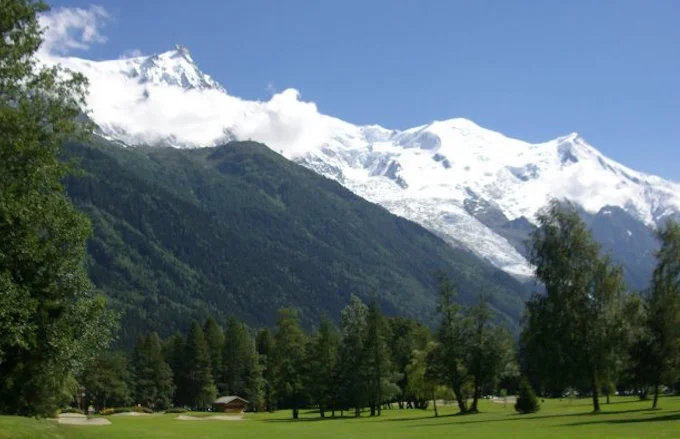
At the request of major hotel owners seeking to entertain their Anglo-Saxon guests, a four-hole golf course was created in Les Praz. Its popularity quickly led to expansion, with five additional holes added the following year. Today, the course has grown into a full 18-hole layout.
1945–1965
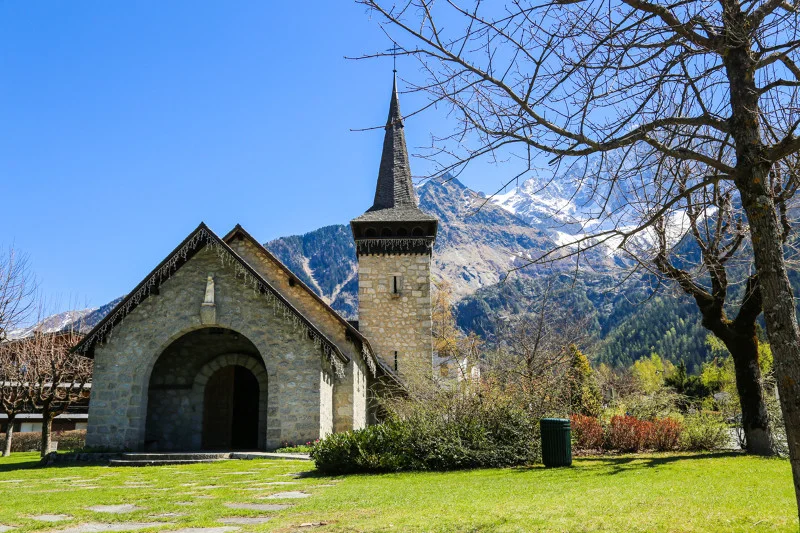
At the end of the Second World War, local residents requested the construction of a chapel in Les Praz. Built from granite with a slender steeple and steeply pitched roof, the church was completed in 1965. It remains one of the most photographed landmarks in the Chamonix Valley.